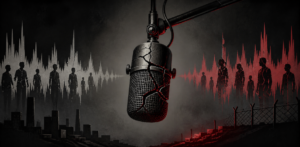


There’s a new management style creeping through the marble halls of Ottawa: absence. Less a policy than a posture, the so-called “ghost cuts” haunting Canada’s federal workforce aren’t being announced so much as they are being… allowed. Positions fade, vacancies linger unfilled, and desks sit empty while the organizational charts hold their breath. Unlike the sharp spectacle of austerity in the Harper years, this Liberal-era erosion operates quieter—less a scalpel and more a slow disappearance. It’s a strategy dressed as silence, and its weapon is fear.
What happens when institutions hollow themselves from within? The rhetoric remains generous—there are no sweeping layoff announcements, only projections and attrition, calibrated just so. But speak to public servants behind closed doors—off the record, in whispers—and you hear something different: confusion, exhaustion, a quiet moral panic. People wonder not just if their work matters, but whether their silence is complicit. When work becomes a question mark, so does self-worth. This is not mere workforce adjustment; this is the unweaving of a civic ethic.
Fear, as philosophers have long warned, is not just an emotion—it is a method. Michel Foucault once suggested that institutions maintain order not only through rules, but by making people internalize danger. In this case, the danger is not being let go, but being left behind in a purposefully unmanned ship. The ghost cuts leverage anxiety as governance, creating a culture where voicing dissent feels risky, pushing back feels self-defeating, and waiting silently becomes a performance of loyalty. The dignity of work is replaced with the strategy of survival.
To grasp the depth of this transformation, we must reclaim the language of public service. A bureaucracy is not a faceless machine—it is, in its ideal form, an expression of collective care, a distribution of moral labour among citizens. But the slow paring down of that ideal, eroded by decades of managerial drift and now deepened by strategic silence, leaves us with a wary ghost of that vision. Bureaucrats fear becoming nothing more than budget lines blamed for broken systems they no longer control. And the public? They inherit the disenchantment that follows when once-strong institutions fall mute.
So we must pose the harder question: Who benefits from a demoralized civil service afraid to speak? When transparency becomes a casualty of quiet governance, it is not just staffing levels that fall—it is democratic trust itself. Perhaps it’s time to listen more closely to those trembling anonymous voices, the ones speaking through newspaper pages and encrypted emails. They are not alarmist. They are the canaries. And their whispers are the sound of meaning, trying not to disappear.